The Embuscade: A French Beer-Sour Worth Building
The Embuscade is a French-style beer-sour that layers cold lager, dry white wine, Calvados apple brandy, blackcurrant syrup, and lemon juice. It tastes crisp, slightly tart, and fruity. Built directly in a wine glass in about 13 minutes, it serves one.

- Basebrandy
- Strength11% ABV, approximate
- Methodbuild
- Glasswine glass
- Difficultyeasy
- Total5 min
- Serves1
- Crisp
- Tart
- Fruity
- With a subtle apple warmth
- Jigger or measuring spoons
- Bar spoon
- Contains gluten (cold lager)
Most people meet Calvados for the first time in a snifter, sipped slow after a long dinner. That's a fine way to treat it, but it's not the only way. The Embuscade takes the apple brandy somewhere livelier: into a tall wine glass with cold lager, dry white wine, blackcurrant syrup, and lemon juice. It's a beer-sour, a category France does better than most, and this is one of its cleverer examples.
The drink does something neat. The lager gives it a crisp, bready backbone. The wine adds a lean, mineral dryness. The Calvados brings a quiet apple warmth that sits underneath rather than shouting. Blackcurrant syrup and lemon pull it all into a sour, berry-laced finish.
You build this one directly in the glass. No shaker, no strainer, no ice. That means the order and the temperature of the ingredients matter more than usual. You're not chilling anything down with ice, so everything going in needs to be properly cold already. Get that right and you have a bright, refreshing drink that's closer to a spritz than a heavy cocktail.
It's a long-tail recipe, not a famous one, but that's part of its charm. It's the kind of drink you make when you want something different that still comes together in minutes.
About the Embuscade
The Embuscade is a French mixed drink that builds beer, wine, and Calvados into a single glass. Its name translates to "ambush" or "trap," a nod to how the lager arrives in the drink unexpectedly. Calvados, the apple brandy from Normandy, is the anchor ingredient. It's made from distilled cider and aged in oak, which gives it a character that ranges from fresh apple to rich, baked-fruit notes depending on its age.
The drink follows the French tradition of mixing beer with other ingredients, a family that includes the panaché (beer and lemonade) and the Monaco (beer, grenadine, and lemonade). What sets the Embuscade apart is the wine and brandy, which push it beyond a simple shandy into something closer to a cocktail. It's typically served as an aperitif, a light way to open a meal without the weight of a spirit-forward drink.
Why it works
- 1The lager's carbonation and light body keep the drink refreshing while carrying the heavier Calvados.
- 2Dry white wine adds acidity and a clean minerality that stops the blackcurrant from reading as cloying.
- 3Calvados contributes apple depth without sugar, so it rounds out the sour profile rather than sweetening it.
- 4Building the drink without ice means the flavours stay at their full concentration and don't dilute.
- 5Blackcurrant syrup binds the beer and wine together, acting as a bridge between their different textures.
Ingredients
Serves 1.
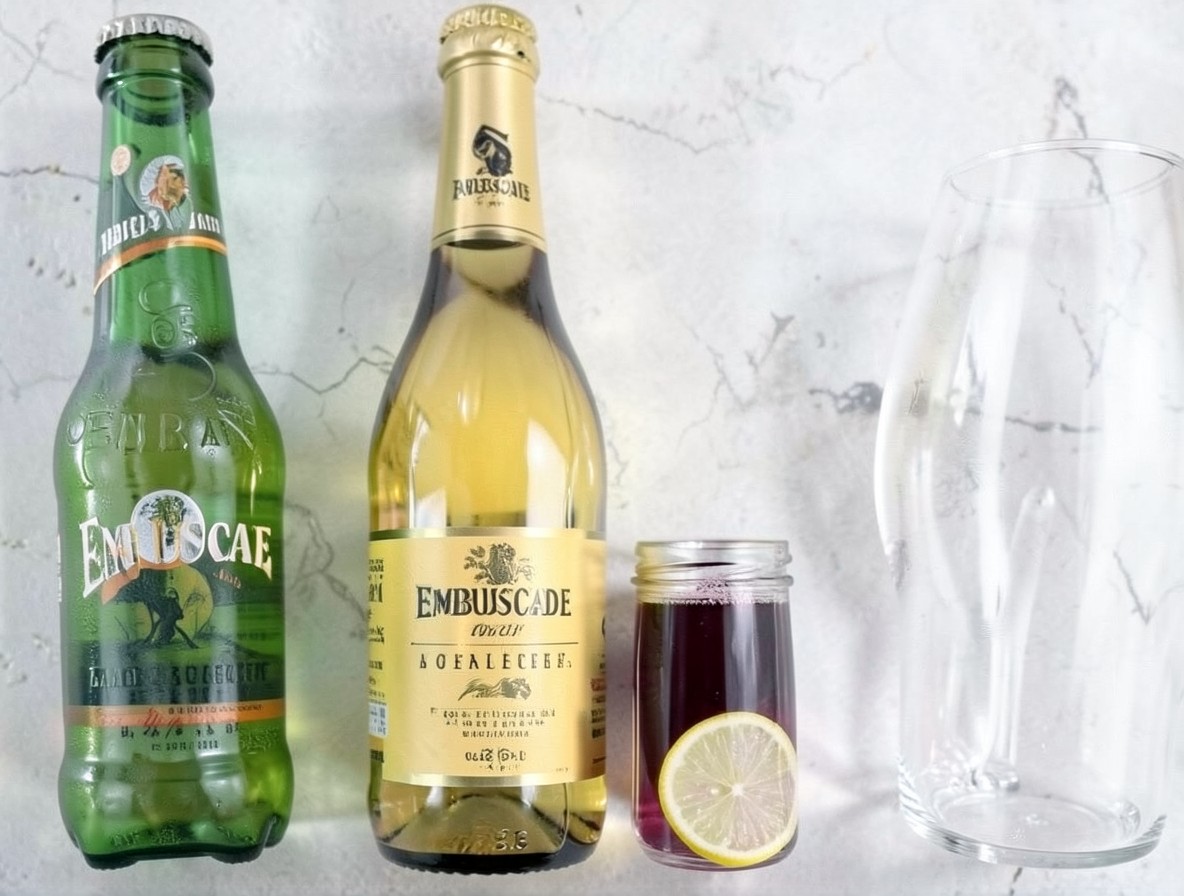
- 10 cl cold lager, chilled
The base of the drink; it must be properly cold since no ice is added.
- 6 cl dry white wine, chilled
Adds acidity; choose something like Sauvignon Blanc or Muscadet.
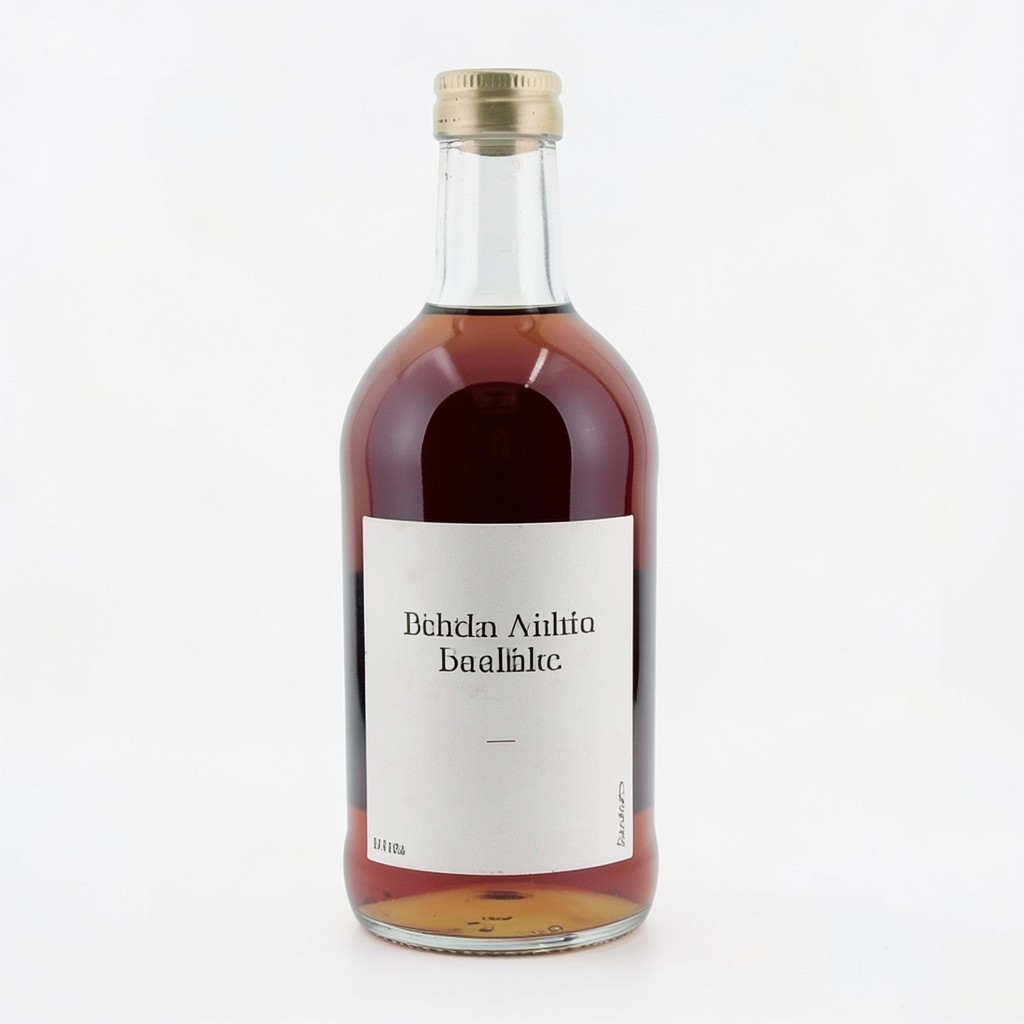 4 cl Calvados apple brandy
The signature spirit; use a VS or VSOP for balance.
- 2 cl blackcurrant syrup
Use a quality crème de cassis-style syrup, not an artificial one.
 2 cl lemon juice, freshly squeezed
Fresh juice is essential; bottled lemon juice changes the balance.
ingredients
The lager and wine do a lot of the heavy lifting here, so pick ones you'd happily drink on their own. A crisp pilsner or helles lager works best; avoid anything too malty or hoppy. For the wine, a dry Muscadet or Sauvignon Blanc brings the right kind of lean acidity. The Calvados matters too. A VSOP with some oak influence adds warmth without overwhelming the beer. If you can't find Calvados, an apple brandy like Applejack is a reasonable stand-in, though it's less refined. Blackcurrant syrup should be the real thing — a concentrated cassis syrup, not a cheap cordial. It's the sweetener and the colour driver, so quality shows.
You need: jigger or measuring spoons, bar spoon.
Method
Measure the spirits
Using a jigger, measure 4 cl of Calvados, 2 cl of blackcurrant syrup, and 2 cl of freshly squeezed lemon juice into the wine glass. This order lets the syrup settle at the bottom, which will help when you pour the wine and beer over it.
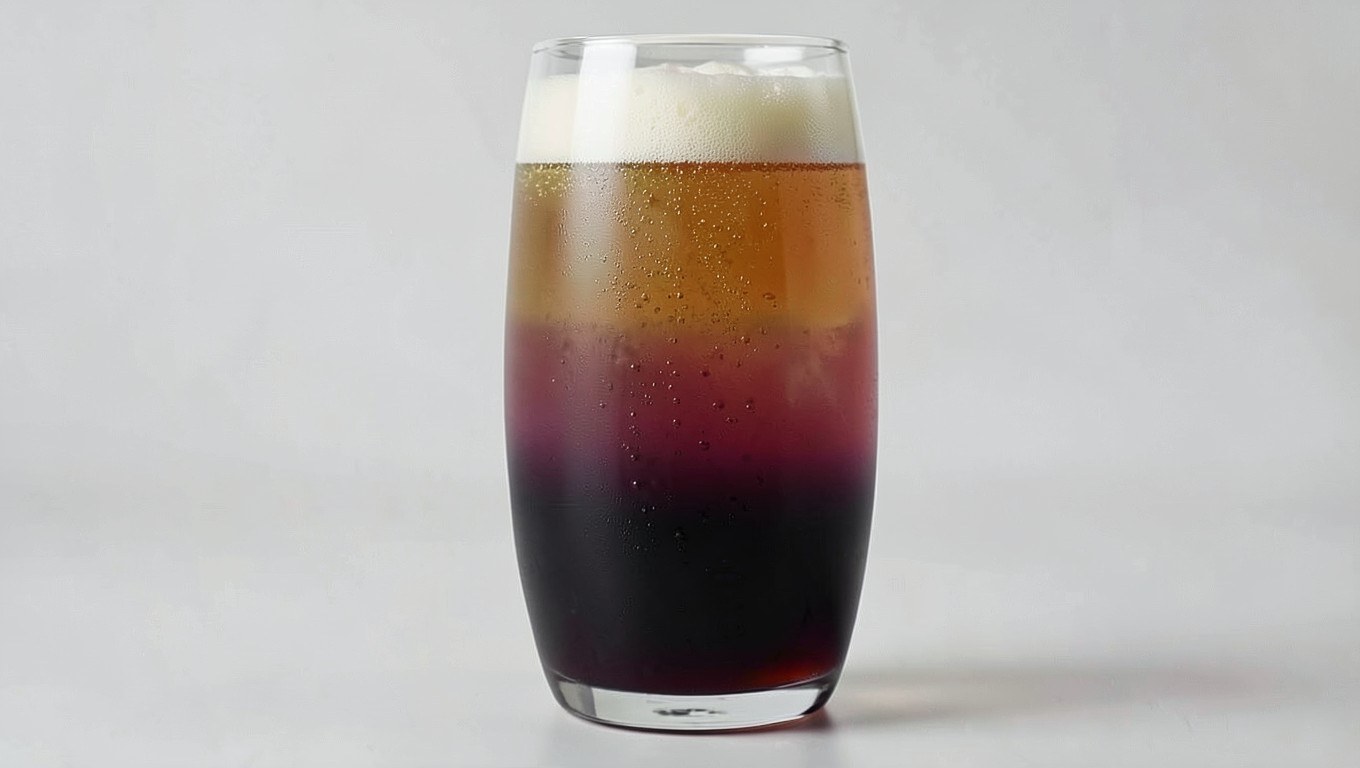
Look for: The glass shows three distinct layers: amber brandy, deep purple syrup, and cloudy lemon juice at the bottom.
Common mistake: Squeezing the lemon juice ahead of time. Fresh juice is fine for an hour, but it starts to lose its bright edge. Squeeze it just before you build.
Add 6 cl of chilled dry white wine to the glass. Pour it gently over the back of a bar spoon if you want to keep the layer distinct, or just pour it straight in if you don't mind it mixing. The wine should be straight from the fridge.
Look for: The wine spreads through the syrup, creating a gradient from deep purple at the bottom to pale gold above.
Common mistake: Using room-temperature wine. Without ice, the drink's temperature is entirely up to your ingredients. Warm wine makes it flat and thin.
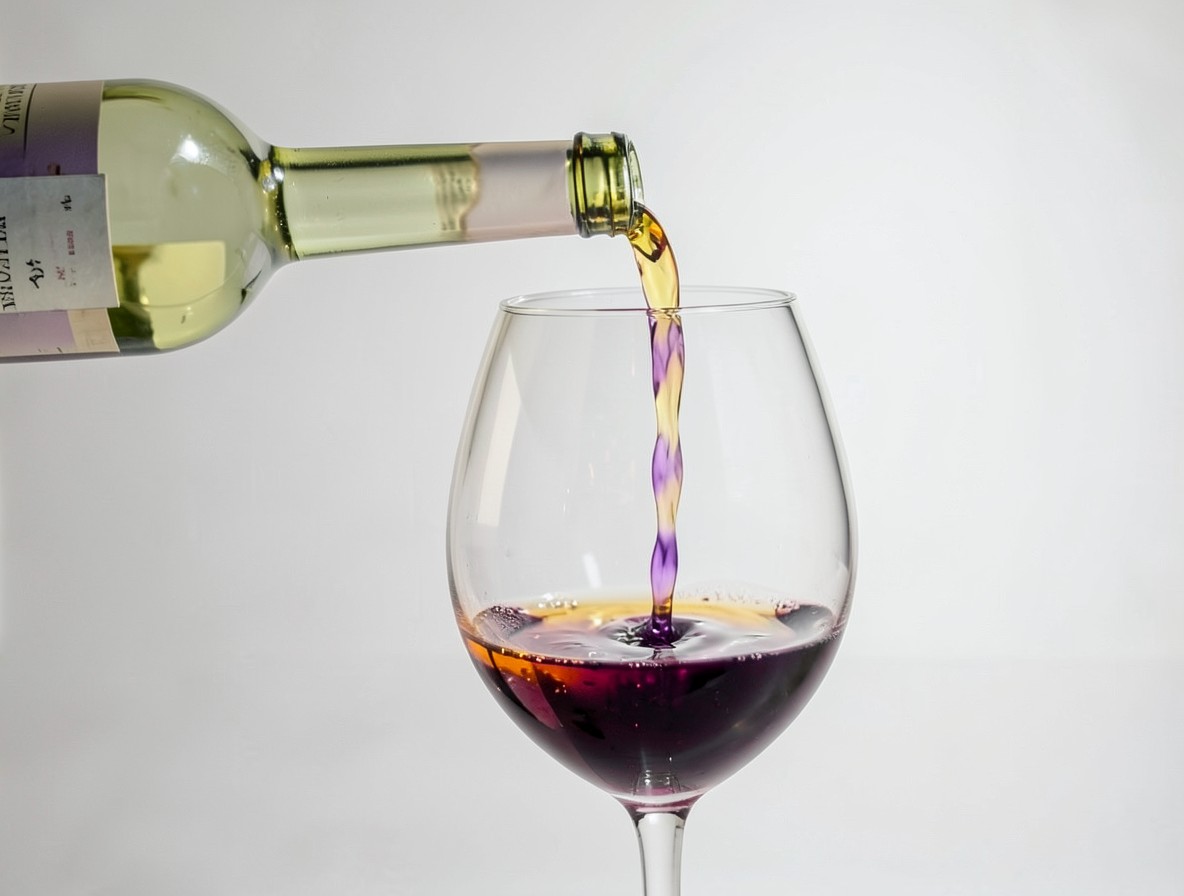
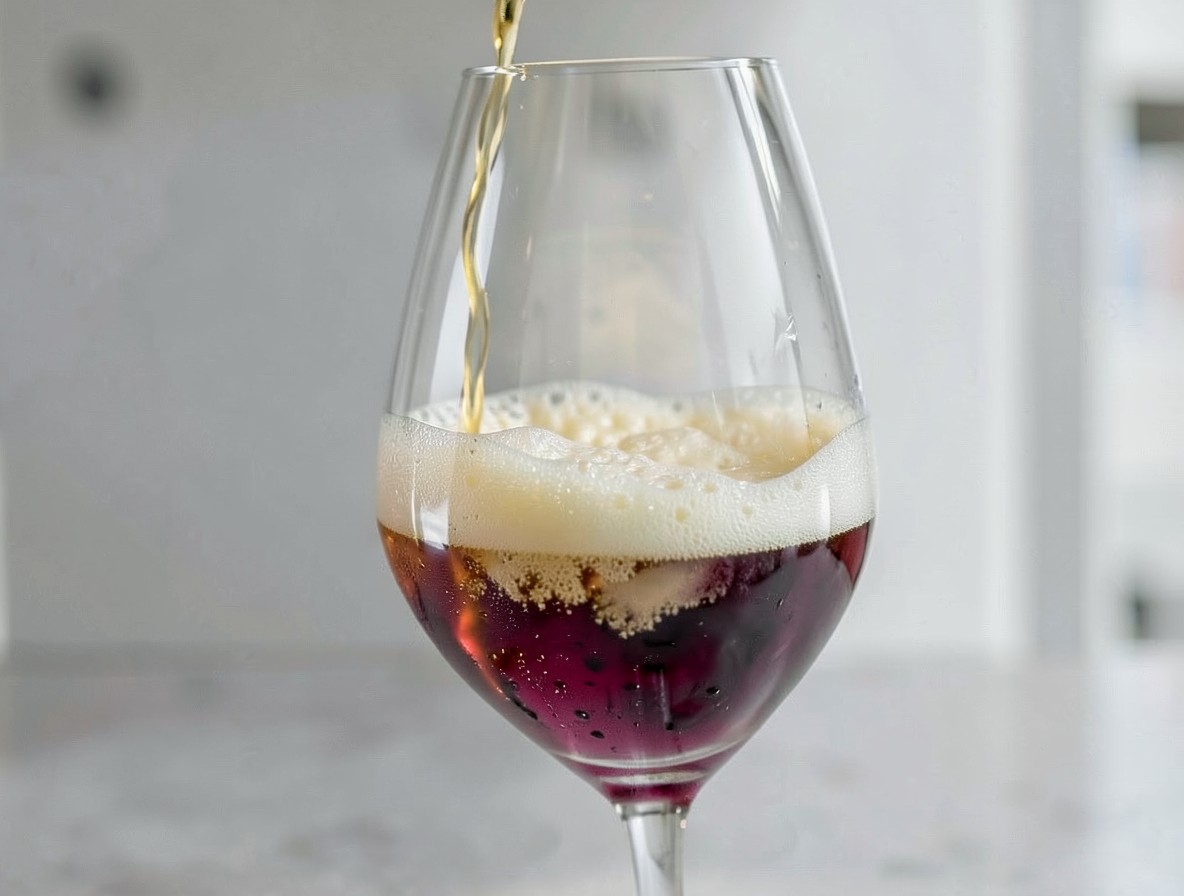
Pour 10 cl of cold lager into the glass. Pour it down the side of the glass to preserve as much carbonation as possible. The beer should be icy cold. This is the final liquid layer.
Look for: A pale, golden beer layer sits on top, with a thin foam head forming at the surface. The layers below it glow purple and amber.
Common mistake: Pouring the lager straight into the middle of the glass. That kills the carbonation instantly and leaves you with a flat, lifeless drink.
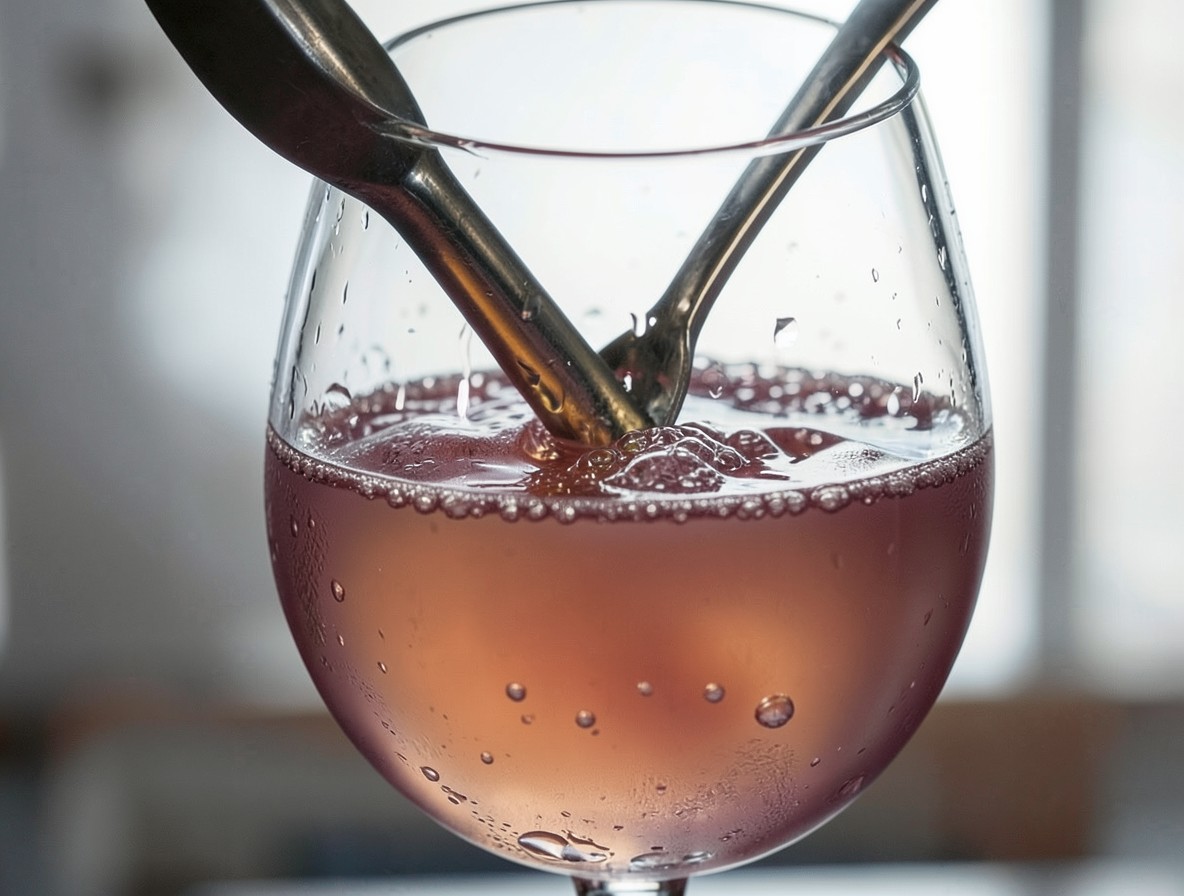
Give the drink one slow, gentle stir with a bar spoon. You want the syrup and lemon juice to integrate with the beer and wine, but you don't want to knock out the carbonation. One or two rotations is enough. Serve immediately.
Look for: The drink becomes a uniform, hazy amber-purple colour. A fine stream of bubbles rises from the bottom of the glass.
Common mistake: Stirring too aggressively. Over-stirring flattens the beer and turns the drink into a watery, blended mess. A gentle fold is all you need.
Tips from the bar
- 1Chill the glass too. A cold glass keeps the drink colder for longer, which is essential when there's no ice in the mix.
- 2Use a jigger, not a free pour. The balance here is precise; 2 cl of extra syrup turns a crisp drink into a candy-sweet one.
- 3Squeeze the lemon juice through a fine strainer to catch any seeds or pulp. It keeps the drink looking clean.
- 4Pour the lager last and gently. The carbonation is the drink's texture; treating it roughly ruins it.
- 5If you want a slightly sweeter version, add 0.5 cl more syrup, but taste first. The Calvados is easy to overpower.
Variations
- Swap the lager for a non-alcoholic beer for a lower-ABV version. The drink stays crisp, though it loses some body.
- Use a Belgian witbier instead of a standard lager for a spiced, slightly creamy character.
- Replace the blackcurrant syrup with raspberry or strawberry syrup for a different berry profile.
- Add a splash of soda water on top for a lighter, fizzier finish if you want to stretch it into a longer drink.
Substitutions
- Calvados can be swapped for any apple brandy, like Applejack. You'll lose some of the French Calvados finesse, but the apple character holds.
- Dry white wine can be replaced with a dry vermouth, which adds a slight herbal note and a touch more body.
- Blackcurrant syrup can be swapped for crème de cassis liqueur, but you'll need to halve the amount since it's sweeter and higher in alcohol.
- Lemon juice can be replaced with lime juice if you want a more pungent, tropical sourness. The flavour shifts noticeably.
Serving, storing, batching
Serve the Embuscade as an aperitif before a meal. It's light enough to open the palate without filling anyone up. It pairs well with oysters, goat cheese salads, or any light seafood starter. The acidity in the drink cuts through the richness of the food, and the apple and berry notes complement fresh, simple ingredients.
The Embuscade is a build-to-order drink. It doesn't store well; the lager loses its carbonation quickly, and the lemon juice dulls. If you're preparing for guests, measure the Calvados, syrup, and lemon juice into the glass ahead of time, but add the wine and lager only when you're ready to serve.
To make a batch for a party, scale the Calvados, syrup, and lemon juice into a pitcher, using 4 cl Calvados, 2 cl syrup, and 2 cl lemon juice per serving. Store this mix in the fridge. When you're ready to serve, pour 8 cl of the mix into each glass, then top with 6 cl white wine and 10 cl lager. Don't stir until the wine and lager are in. This avoids the batch going flat.
Questions people ask
Calvados is an apple brandy from the Normandy region of France. It's made by distilling cider and then aging the resulting spirit in oak barrels. The flavor ranges from fresh apple to rich, baked-fruit notes, depending on how long it's aged.
Calvados is versatile. It works in cocktails like the Embuscade, mixed with beer and wine, or in classic drinks like the Jack Rose. It also pairs well with ginger ale, apple juice, or tonic water for a simple highball. Its apple character means it blends easily with citrus and berry flavors.
Calvados tastes primarily of apple, but the flavor is complex. Young Calvados is bright and fruity with a sharp apple edge. Aged Calvados develops rounder notes of baked apple, caramel, vanilla, and oak, similar to what you'd find in a fine cognac. It's dry, not sweet.
The French Kiss cocktail typically combines Calvados, amaretto, and cream. It's a sweet, dessert-style drink. This is different from the Embuscade, which uses lager, wine, blackcurrant, and lemon for a sour, refreshing profile. Both use Calvados, but they achieve very different results.
No, the Embuscade is built without ice. The drink relies on having all its ingredients properly chilled, and the lager's carbonation provides the texture. Adding ice would dilute the drink and change its balance completely.
To make a non-alcoholic version, replace the lager with a non-alcoholic beer, the wine with a non-alcoholic white wine, and the Calvados with a splash of apple juice or non-alcoholic apple brandy. The blackcurrant and lemon stay the same. It won't have the same depth, but it'll stay crisp and fruity.
A dry, crisp white wine works best. Muscadet, Sauvignon Blanc, or a dry Riesling all have the acidity needed to cut through the syrup and beer. Avoid oaky Chardonnay or anything sweet, as they'll make the drink heavy and unbalanced.
The recipe makes a single serving. To make more, scale the ingredients per glass. Since it's a build-in-the-glass drink, each one is made fresh. For a party, see the batching notes to prepare ahead of time.
Last word
The Embuscade is a short, sharp lesson in how well beer, wine, and brandy can share a glass. It's bright, sour, and unexpectedly elegant. If you keep a bottle of Calvados on the shelf, this is a great reason to reach for it. Build one tonight.